
Does your home need updating to sell, but you don't want to do the renovation? We have cash buyers who will buy your home!
Table of Contents
By Ryan Huggins, CISA, CICP, C-RISC, Broker
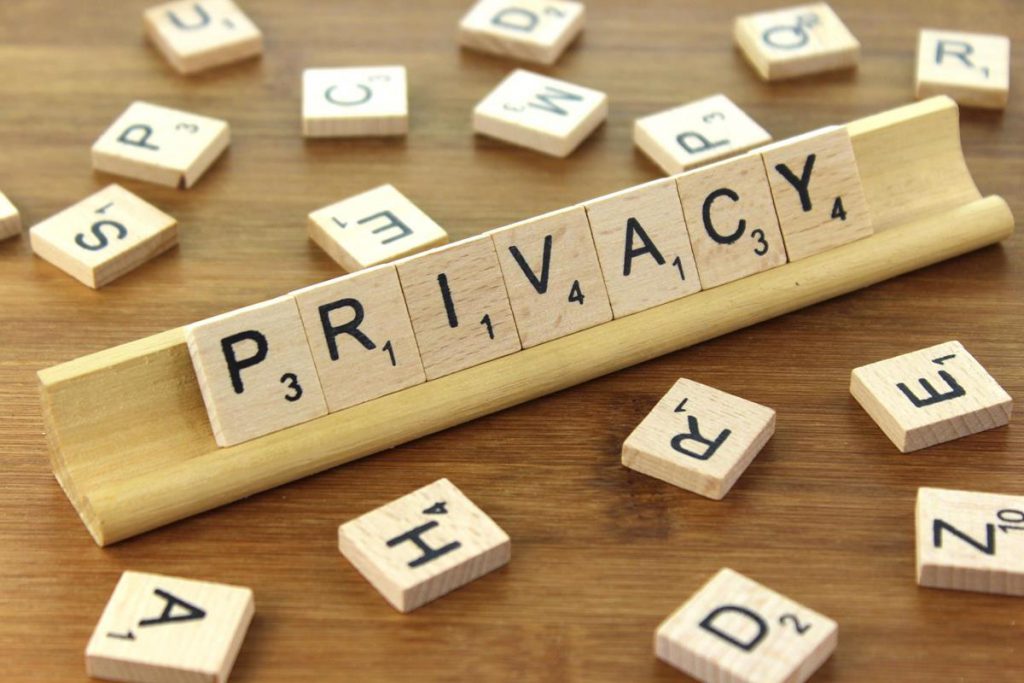
Privacy. In the aftermath of large publicized data breaches such as TJ Maxx, Office of Personnel Management and the California Association of Realtors as well as the Edward Snowden revelations, Facebook's Cambridge Analytical scandal and privacy legislation such as the European Union's GDPR, privacy is more and more in the forefront of people's minds. But what is privacy? Merriam-Webster's dictionary defines privacy as "freedom from unauthorized intrusion." What does that mean? Well going back to my computer security days, privacy is considered one of the four basic pillars of computer security. Simply put, privacy is "being able to do something without an unauthorized third party knowing about it or it's details." You could also define it as a "lack of eavesdropping."
One classic example of this is being on a coffee shop wifi and not worrying about the person at the other end of the cafe watching the internet traffic and seeing your login and password for your bank.
Recently in one of the Realtor networking groups I actively participate in, Active Rain, there was a question posed which sparked a very interesting discussion. The Realtor had recently performed a Google search on herself and found that there was an uncomfortable amount of personal information about her out there on one of those "My Life" people search engine sites. This information included possible passwords, phone numbers, email addresses and past physical addresses. The question, which I answered at length, was about how to remove that information from the web. After having a few conversations with various members, I decided to write this blog post to help educate my fellow real estate agents, Realtors and Brokers.
While this is a personal decision for each and every person, it is an especially interesting for those of us in professions which require an internet presence. For me, I don't mind if certain "newsworthy" items are posted about me or if my phone number and email are readily available... heck, that's a must in my book if I want to stay in business! But where I draw the line is personal data. Physical addresses, banking, health, licensing and government related items.
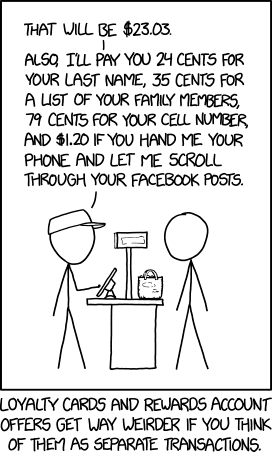
XKCD.com comic regarding the true value of customer rewards cards
Before we can discuss removal, we have to first understand how these sites get their information in the first place. Most of these sites get their information from companies known as "Data Brokers". These companies gather all the information they can on you from "open source" public information that is 100% legal to access. Some of these sources include county assessors offices, tax filings and even the phone company. Then there are the more interesting sites, such as LinkedIn, Facebook, MySpace and then services like your frequent shopper cards (you didn't think that two for one deal was out of the goodness of the company's heart, right?) and even sites like Pastebin, that publish information found in data breaches.
So how do we stop this information from ending up on these data brokers' servers? Well, the first thing is to stop publishing what you don't want them to know about! You must assume that anything you post in a social network or anywhere on the internet may be seen by someone you didn't intend and didn't want to see it. Classic cases involve people who called in sick to work and then posted about being at the Dodger game or down at the beach. I've even helped a Human Resources Department or two investigate these. Those posts, while supposedly private, ended up catching the wrong person's attention and ended up with the employee being reprimanded or worse. My recommendation: either abandon social media all together or severely limit what you post on it. Are you worried about some of the things you may have posted in the past? There are ways to automate the deletion of your Facebook history.
Some of you may recall a few Presidential elections back when Sarah Palin ran for Vice President. During this election her personal email was hacked exposing some private information. How was this hack done? They didn't crack any passwords, they simply looked at her social media and found out her wedding date, her high school and her kids names. They then used this information to answer the "Forgot Your Password" security questions and them reset her password and locked her out. I recommend against publishing this information on social media, that includes liking a Facebook group for your graduating class. It's not enough to put the "School of Hard Knocks" or "Starfleet Academy" as your school.
Other steps you can take are to clear and disable your search histories on sites like Google.com and Amazon.com Additionally, you can even use search engines like DuckDuckGo and StartPage to search anonymously.
The next step would be contact the sites and ask them to remove your information. There are dozens, if not hundreds, of these sites out there so this can be a daunting task. Luckily for us, there are three main data brokers which provide most of these sites with the data they sell. There are Intelius, Acxiom and Innovis. Getting your information removed from these sites is a good start.
 In addition, going through the three main credit bureaus and the three smaller bureaus (yes, there really are six credit bureaus) to freeze your credit is another way to not only help protect your privacy, but to help guard against identity theft.
There are several resources on the web to help you with removing your data from data broker's sites. Some companies are available and charge for their services, but this is something you can do for free. By far my favorite resource for this is the workbook from Michael Bazzell's book "Hiding From The Internet" which you can find on Amazon here. There are also other data broker lists online here and here, which I found while researching further for this blog.
Is this all I need to do? Is there anything else I can do? Yes, there is! The totality of what you can do is too large to cover in just this blog post, but I will give you what I consider to be some of the most important things you can do.
This blog only scratches the surface of what is out there to protect your privacy. There are many, many additional resources for those that are interested in diving deeper into this field of study. Some of my favorites include:
I hope you have enjoyed this blog and have learned something you can implement to better protect your privacy, now go out there and implement it!
Please email me if you have any questions at Ryan@HugginsHomes.com I'd be happy to discuss them with you.
DHS's "Stop Think Connect" Cyber Security Program
Huggins Homes is a proud partner of the Stop Think Connect campaign.
Disclosures: Please consult with the appropriate specialists before implementing anything from this blog, especially with regards to title and LLCs. There may be tax or other legal consequences that only an expert in those areas can advise you on. Ryan Huggins and Huggins Homes will not be held accountable for any loss, damage or other negative issues arising from your use of the information provided here. Additionally, some links contain affiliate program links and the author of this blog may earn a commission.
